Previous
Next
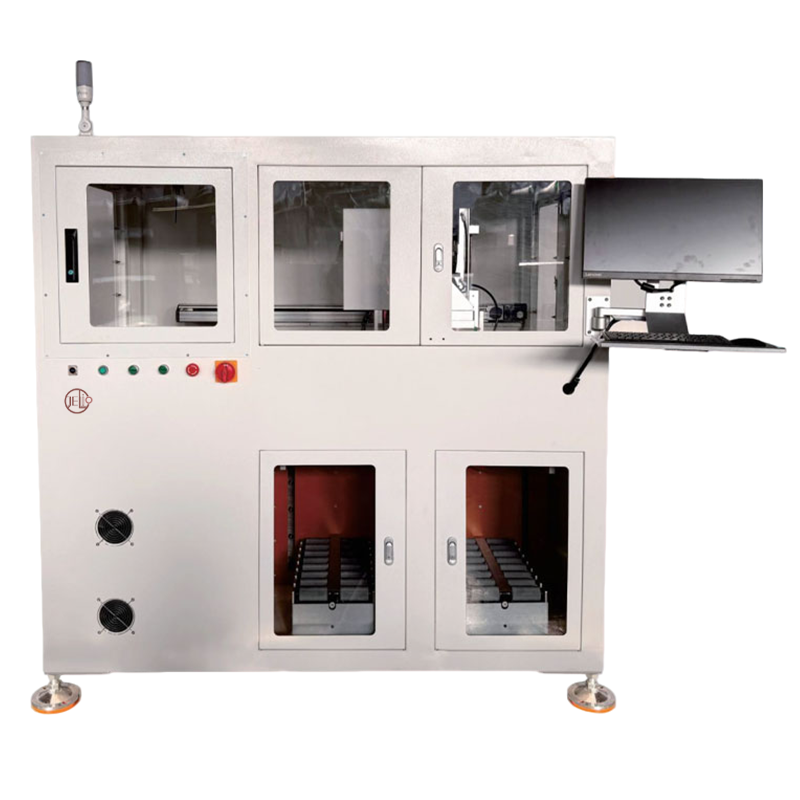
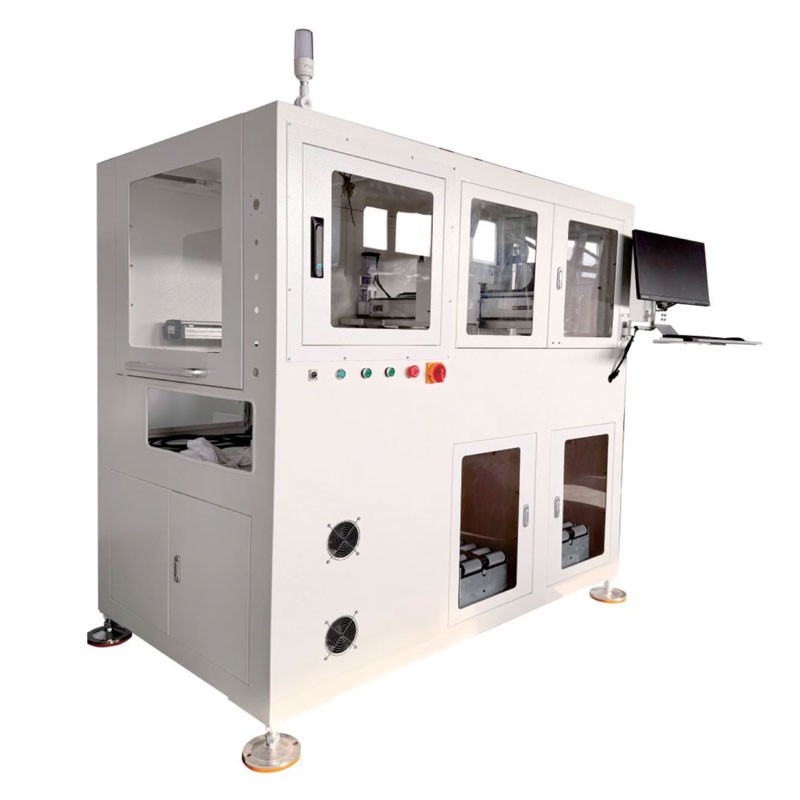
| Model | JLO-5040B |
| Repeat Positioning Accuracy | ±0.05mm |
| Tray Size | 500mm(X)*400mm(Y) |
| Tray Loading Height | Max 450mm |
| Tray Magazine Load Capacity | Max 50KG |
| Magazine Lifting Speed | Max 250mm/s |
| Material / Tray Handling Method | Vacuum nozzle suction |
| Nozzle Rotation Angle | CW90°/CCW90° |
| Suction Quantity | Max 5pcs (single/multi-head available) |
| Number of Loading Nozzles | Five (variable pitch) |
| Pitch Adjustment Range | Automatic pitch adjustment available |
| Single Head Suction Size (Linked) | 16mm*90mm-36mm*90mm |
| Single Nozzle Load Capacity | ≤200g |
| Pick-and-Place Positioning Method | CCD camera recognition & positioning (optional) |
| Post-Depaneling Inspection | Visual inspection system (optional) |
| MES Connection | Supported |
| Voltage | AC220, 50-60Hz |
| Air Pressure | 0.5-0.7mpa |
| Dimensions | 1100mm*1800mm*1800mm |
| Weight | 900KG |
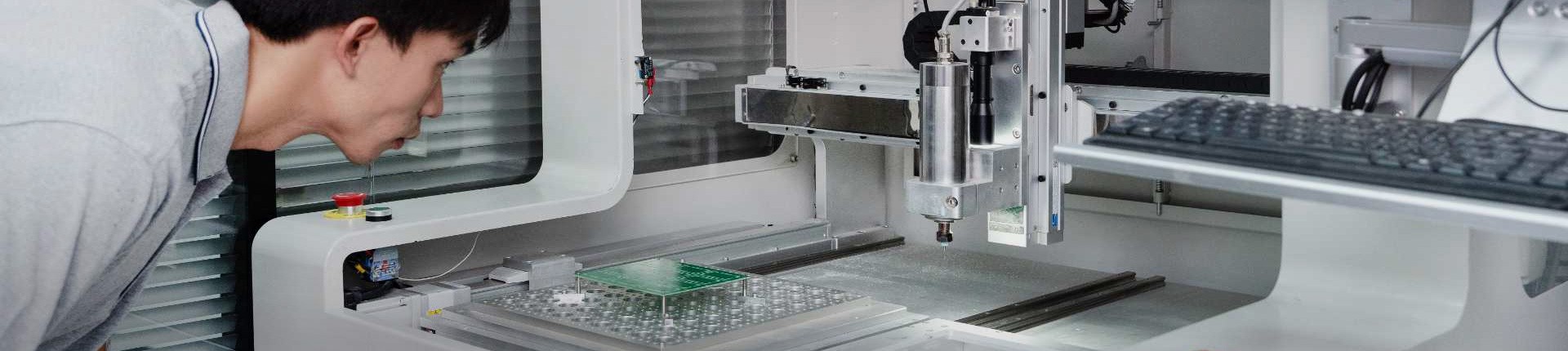
The tray loader can automatically complete PCBA placement after board separation, with tray loading efficiency far exceeding manual operation and requiring almost no human intervention, significantly reducing labor costs.
Multiple empty trays can be placed at once. When a single tray is full, it can automatically lift and stack for the next empty tray, eliminating the need for manual loading/unloading of empty trays during the cycle.
The tray loader can work with depaneling machines, other equipment, or AGVs to form an automated production line. Through standardized carriers and intelligent transfer systems, seamless connection between workstations is achieved, reducing intermediate links and improving overall production line efficiency.
The distance between the depaneling tool and the downstream Tray can be adjusted via the pitch module. Multiple heads pick and place materials simultaneously, reducing the number of operations and shortening waiting time between processes.
The combination of mechanical structure and intelligent algorithms ensures accurate PCBA placement, avoiding human errors, guaranteeing consistent tray placement for each batch, and preventing defects caused by human collision.
The equipment can integrate inspection functions to detect abnormalities after board separation, and identify PCBA defects in other processes through barcode recognition, enabling separate placement of good and defective products.



Router / Milling DepanelingGuillotine DepanelingLaser DepanelingIntegrated SystemsPeripheral Equipment
Automotive ElectronicsSemiconductor & ElectronicsNew EnergyLED & LightingConsumer Electronics
Company ProfileR&D & InnovationManufacturing CapabilityGlobal Clients
+8618994642000
Office HeadquartersNo. 5 Datong Road, High-Tech Zone
Suzhou, Jiangsu 215000, China
 Scan LINE QR
© 2026 JELIO Automation. All rights reserved.

+8618994642000


 WhatsApp: +8618994642000
 Email: xiafangtong@gmail.com